This article is a “Purchasing Guide” Singapore server “Guidelines for Selecting Standard Power Cord Sockets and Converters” provides practical selection tips and compliance checks for engineers and procurement staff involved in deploying or maintaining servers in Singapore, helping to reduce risks and improve operational efficiency.
In Singapore, the standard mains voltage for commercial and data center use is 230V at 50Hz. Wall sockets typically use British three-prong Type G grounded sockets. When purchasing servers and corresponding power supplies, it is necessary to first confirm the local voltage and socket type to avoid additional conversion or safety hazards caused by voltage or plug mismatches.
Servers and power distribution equipment generally use IEC series interfaces (such as C13/C14, C19/C20, etc.). When selecting, ensure that the cable connector matches the device, while also paying attention to the cable diameter, rated current, and temperature rating to meet long-term full-load operation and heat dissipation requirements.
““Converters” include plug adapters, transformers, and voltage converters. If the device natively supports 230V, only a compliant plug adapter is required ; If the device does not support it, a qualified voltage converter or isolation transformer must be used. Avoid long-term use of temporary, low-quality converters to prevent overload and failures.
Servers require reliable grounding and overcurrent protection. The server room should be equipped with leakage protection, circuit breakers, and surge protection devices. It is recommended to use UPS and redundant power supplies for critical systems to ensure smooth switching in case of power failures and to protect device data and hardware integrity.
Rack power supply design should consider PDU placement, circuit redundancy, and load balancing. Choosing a PDU that supports remote monitoring can improve operational visibility. When purchasing, ensure that the PDU matches the cabinet height, socket type, rated power, and whether it supports dual-redundant power supply.
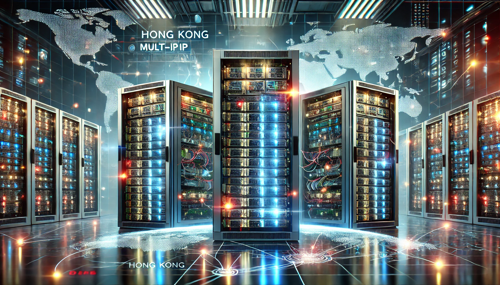
Cable selection involves not only length and rated current but also affects cable flexibility and cabinet heat dissipation. Avoid excessive cable loops and accumulation that can obstruct airflow. Prioritize organized cable tray management and labeling strategies to reduce maintenance time and minimize the risk of heat buildup.
Before purchasing, verify the safety certifications and compliance certificates of the power cord and converter to ensure the product meets Singapore’s and international electrical safety standards. Review the supplier’s after-sales service, prototype testing, and quality assurance policies to reduce maintenance risks after deployment.
After delivery and installation, conduct insulation, current load, and grounding continuity tests to verify the PDU and UPS switching function. Conduct on-site testing and record the results as a basis for acceptance, to ensure that the actual operating conditions match the design parameters.
When selecting, initial purchase costs and long-term maintenance costs should be considered together, giving priority to modular cables that are easy to replace and power equipment that supports remote monitoring. A reasonable spare parts strategy and regular inspections can significantly reduce the risk of unplanned downtime.
Summary: When purchasing server power cords, standard sockets, and converters in Singapore, prioritize ensuring compatibility with 230V power supply and Type G sockets. Choose cables with IEC connectors, as well as qualified adapters or conversion devices. Also, pay attention to grounding, surge protection, and UPS protection. It is recommended to include compliance certificate verification, prototype testing, and on-site acceptance in the procurement process, as well as establish clear wiring and maintenance standards to reduce risks and improve operational efficiency.
- Latest articles
- Why Do E-commerce And Video Platforms Need Japanese Native IP Websites To Ensure A Good Experience?
- Survival Strategies And Differentiated Service Explorations For Small And Medium-sized Vendors In The U.S. Server Hosting Industry
- How To Quickly Raise The Entry-level Salary Tier Of Hong Kong IDC Data Centers Through Certificates And Project Experience
- A Practical Guide To Comparing Malaysian Cloud Server Price Lists For Different Models And Bandwidth Options
- Where To Buy Taiwan Native IPs With Legal And Compliant Buying Guides
- Which Cloud Server In Vietnam Is A Good Case, Sharing Best Practices And Implementation Experiences Across Different Industries
- Gaming Industry Special Edition: Thailand Acceleration Server Rankings And Player Experience Report
- IP Reputation And Blacklist Risk Management When Choosing Hong Kong Multi-IP Server Hosting
- How Cross-border Developers Can Choose A German VPS Hosting Solution That Is Compliant And Supports GDPR
- In-depth Analysis Of The Pros And Cons Of Hong Kong Server CN2 And A Guide For Small And Medium-sized Enterprises To Buy
- Popular tags
-

Best Practices And Techniques For Setting Up Don’t Starve Servers In Singapore
learn how to set up an efficient don't starve server in singapore, and explore best practices and techniques to make your gaming experience smoother. -
Players Share Useful Tips For Team Matching And Communication On The Genshin Impact Singapore Server Group
Players share practical tips for team matching and communication on the Genshin Impact Singapore server group, including matchmaking mechanisms, local communities, communication etiquette, role distribution, and account security. These tips are suitable for players in the Singapore region. -
